
Job Readiness Activities for High School Students
Effective job-readiness instruction helps students practice what work actually requires: showing up, communicating clearly, following directions, solving problems, responding to feedback, and making good decisions.
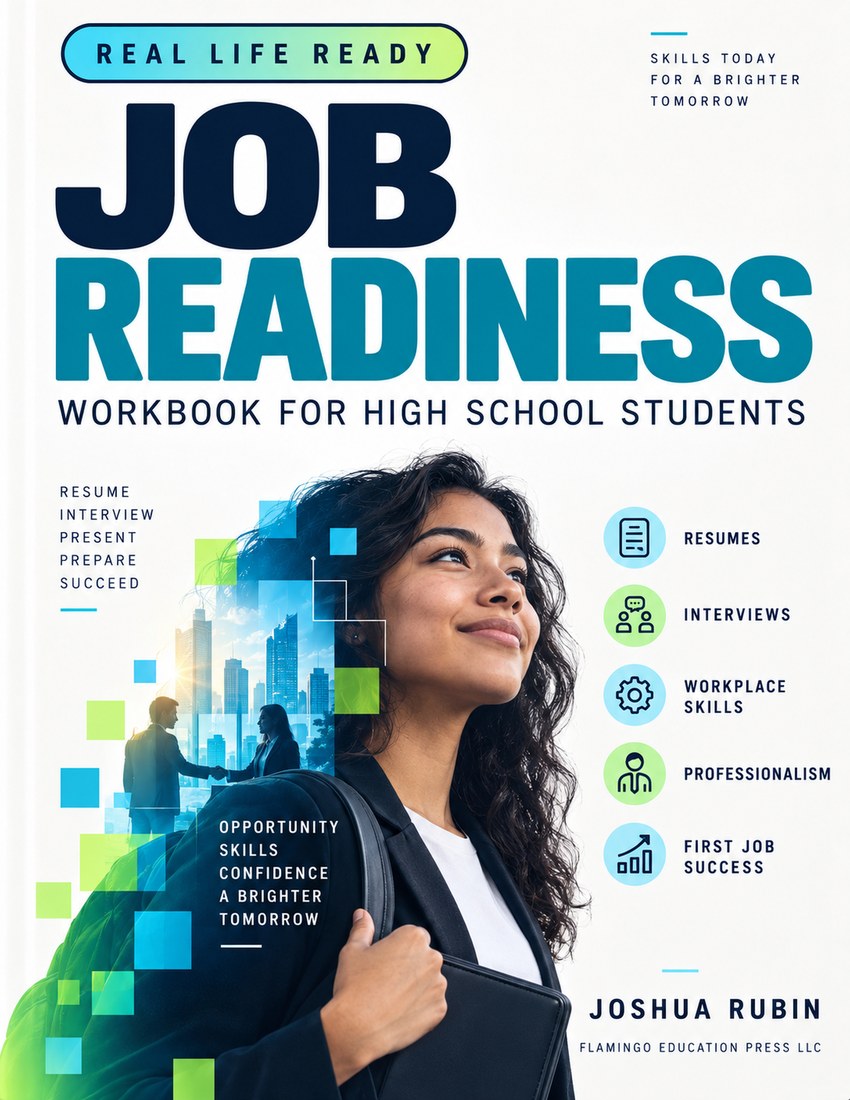
Job Readiness: choose digital teaching activities or a printed workbook
Digital classroom materials and printed workbooks are complementary products, not identical files. Pick the format and scope that best fit your students.
For teachers planning employment-skills lessons: 126 applied activities, answer support, implementation guidance and a portfolio.
Explore digital activities on TPT →Complementary printed practice and skill-building. Check the paperback's contents and availability on Amazon.
View paperback on Amazon →TPT handles payment and digital delivery; Amazon handles paperback orders. Compare related resources →
Try this classroom workplace scenario
Situation: A student working an evening shift realizes their ride is going to be late and they may miss the beginning of work. Ask students to identify who to contact, when to contact them, and what information the message should include. Compare a vague message sent after the shift begins with a timely, honest message that explains the situation and asks for next steps.
Extend the exercise: Have students practice a phone call, a short professional message, and a follow-up after they arrive. Discuss how transportation planning, reliability, and communication connect. For a structured sequence of additional employment scenarios and skills, see the Job Readiness Workbook, available in paperback through Amazon.
Job readiness is more than writing a résumé
Résumés and applications matter, but they are only one part of preparing a student for employment. Many first-job problems happen after a student has been hired: arriving late, misunderstanding directions, not knowing how to ask for clarification, reacting poorly to correction, using a phone at the wrong time, or failing to communicate about an absence.
That is why strong career-readiness instruction should combine employment documents with workplace behavior, communication, judgment, and self-management.
High-value activities to include
- Application practice: reading directions, gathering information, completing forms accurately, and checking for missing information.
- Interview scenarios: answering common questions, asking appropriate questions, and explaining experience honestly.
- Workplace expectations: attendance, punctuality, dress, phone use, task completion, and professional behavior.
- Supervisor communication: asking for clarification, reporting a problem, requesting help, and responding to feedback.
- Problem-solving: what to do when a task changes, a coworker disagrees, transportation fails, or a mistake happens.
- Pay and scheduling: reading a work schedule, understanding hours, estimating pay, and balancing work with other responsibilities.
Common weaknesses in job-readiness lessons
One weakness is focusing almost entirely on getting the job instead of keeping the job. Students may spend weeks on résumé formatting and only a few minutes on attendance, feedback, workplace communication, and reliability. Yet those day-to-day habits often determine whether an entry-level employee succeeds.
Another weakness is using activities with one obvious “school answer.” Real workplaces require judgment. Students benefit from scenarios where more than one response might work and they must explain which option is most professional, safest, or most likely to solve the problem.
A practical teaching sequence
- Introduce one workplace expectation or decision.
- Explain why it matters to an employer and employee.
- Give students a realistic scenario.
- Have them choose and justify a response.
- Discuss likely consequences of different choices.
- Repeat the skill in a different workplace context.
Using a workbook without making instruction passive
A job-readiness workbook is most useful as a structure for discussion and practice. Written activities can prepare students for role-play, mock interviews, workplace simulations, school jobs, job shadowing, or work-based learning. The workbook becomes the organized foundation, while practice makes the skill transferable.
Ready for a complete Job Skills sequence?
The digital Job Skills resource includes 126 applied activities for applications, interviews, workplace expectations, communication, attendance, feedback, scheduling, and everyday workplace problem-solving. A complementary paperback is also available for students who need printed practice.
Related career-readiness topics
Job readiness overlaps with transition planning, career exploration, self-advocacy, communication, transportation, money skills, and organization. See the Real Life Ready collection or begin with our transition-skills curriculum guide.
Job readiness activities: common teacher questions
What job readiness skills should high school students practice?
Students benefit from practice with applications, interviews, workplace communication, attendance, punctuality, following directions, responding to feedback, solving everyday workplace problems, reading schedules, and making professional decisions.
What are examples of job readiness activities?
Useful activities include completing a realistic application, practicing interview questions, choosing how to respond to a supervisor, reading a weekly work schedule, deciding what to do when transportation causes a delay, identifying professional and unprofessional phone use, and explaining how to recover from a workplace mistake.
How can teachers make job readiness instruction more realistic?
Use scenarios with consequences and more than one plausible response. Ask students to explain why a choice is professional, safe, reliable, or likely to solve the problem, then repeat the skill in a different workplace setting.
Is job readiness instruction only for students in special education?
No. These skills are useful for any student preparing for employment, work-based learning, internships, career-technical education, or greater independence after high school. Teachers can adjust the amount of support and practice for their students.