
Executive Functioning Activities for Middle & High School Students
Teach task initiation, planning, organization, time management and follow-through with practical routines students can actually use.
Executive functioning: free support, full digital program or paperback
Digital classroom materials and printed workbooks are complementary products, not identical files. Pick the format and scope that best fit your students.
For structured instruction across 12 executive-functioning units. You can also begin with our separate free task-initiation activities.
Explore digital activities on TPT →Complementary printed practice and skill-building. Check the paperback's contents and availability on Amazon.
View paperback on Amazon →TPT handles payment and digital delivery; Amazon handles paperback orders. Compare related resources →
Try a five-minute task-start routine
Give a student one real assignment and ask them to identify the exact first action, such as opening the document or writing a heading. Offer a visual cue, begin with a short timed practice period, and then check whether the first step was clear. If the student did not start, treat that as information about the barrier—not proof that more reminders will solve it.
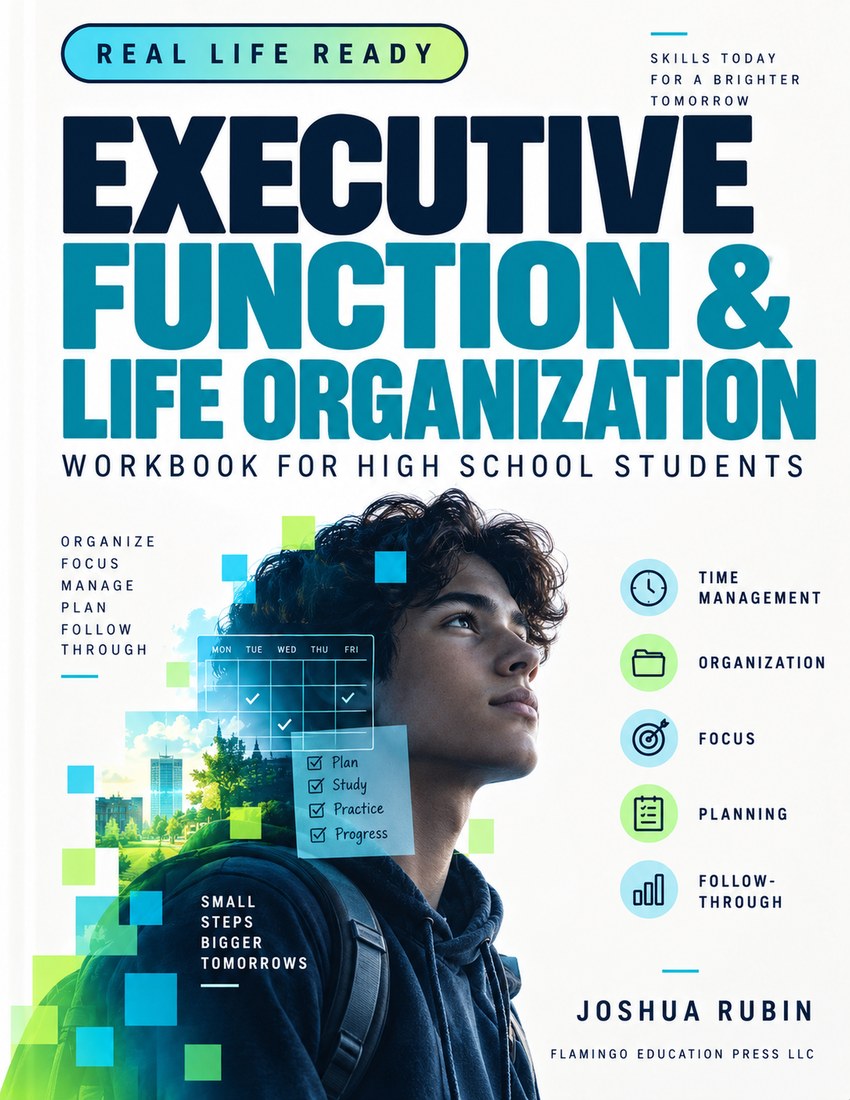
For ready-to-use activities and several levels of support, see our free task-initiation activities, $4.95 focused toolkit, and comprehensive executive-functioning system. The printed Real Life Ready workbook is a separate paperback option.
Make invisible tasks visible
“Do your project” is not a single action. Students may need to identify the first step, required materials, deadline, estimated time, checkpoints, and what “finished” actually means. Turning a vague responsibility into visible steps reduces the amount of planning the student has to hold in working memory.
Teach task initiation separately from task completion
Some students know how to do an assignment but struggle to begin. Practice choosing a starting cue, defining a five-minute first action, removing avoidable distractions, and deciding what to do when the student feels stuck.
Use external systems on purpose
Calendars, timers, written checklists, visual schedules, reminder apps, folders, and designated places for important items are not shortcuts. They are tools that reduce the executive load of remembering everything internally.
Build routines around repeated problems
If the same problem happens every week—missing materials, forgotten deadlines, late departures—build a routine for that exact moment. A short repeated checklist is often more useful than another lecture about responsibility.
Practice recovering from a failed plan
Real life includes interruptions. Students should learn how to notice that a plan is no longer working, identify what is still possible, communicate early when needed, and create a revised next step.
A simple planning routine
- What needs to be done?
- What is the first visible action?
- What materials or information are needed?
- When will I start?
- How long might it take?
- What could get in the way?
- How will I know it is complete?
Ready for structured Executive Functioning instruction?
The 120-activity digital resource gives teachers a complete sequence across task initiation, planning, organization, time management, working memory, self-monitoring, flexibility, and follow-through. If you only need task-initiation support, the free activities and $4.95 toolkit remain available.
Related Real Life Ready guidance
Choose executive-functioning support by format
Teachers can use the 120-activity digital teaching resource on TPT ($49.95). Students and families can explore the complementary printed workbook on Amazon. These are not identical products.
Start with free task-initiation activities and compare the $4.95 toolkit before choosing the full resource, or compare digital and print formats.
When organization is only part of the challenge
Executive-functioning instruction often overlaps with preparing for work, communicating needs and building independent routines. Explore complementary resources for the next skill your students need. Each collection is a separate purchase.
Executive functioning activities: common teacher questions
What executive functioning skills should middle and high school students practice?
Useful practice areas include task initiation, planning, prioritizing, organization, time management, working memory supports, self-monitoring, flexible problem-solving, and recovering when a plan breaks down. Students benefit most when these skills are practiced through concrete school and real-life situations.
What are examples of executive functioning activities?
Examples include breaking a large assignment into visible first steps, estimating how long a task will take, building a weekly plan, organizing materials, choosing a reminder system, identifying distractions, creating a recovery plan after procrastination, and reflecting on which strategy actually helped.
How do I help a student who understands the assignment but will not start?
Separate starting from finishing. Ask the student to identify the barrier, define one small visible action, remove unnecessary friction, and practice a short start. Our task-initiation pathway includes a free starting point, a focused toolkit, and the complete executive-functioning program.
Do I need the full 120-activity resource?
No. Teachers who only need task-initiation support can start with the free activities or focused toolkit. The full digital resource is designed for broader executive-functioning instruction across multiple skills and units.